Unmarketed Labs
← Work
07

CASE STUDY — 2026

The exhaust of the F1 news cycleturned into grip.

Blown Diffuser · Custom Build + Editorial Architecture · Sports Media · 2026

Independent Formula 1 news and analysis.

YEAR

2026

launch year

SCOPE

Custom build

full editorial architecture

PUBLICATION

blowndiffuser.com

Independent F1 news

AUDIENCE

Global, US/UK-first

India strategic secondary

THE CLIENT

Blown Diffuser is an independent Formula 1 news publication at blowndiffuser.com, founded and edited by Utathya Ghosh — formerly of EssentiallySports (1M+ monthly reads), with a Masters in Sports Journalism and a paddock pass worth of F1 context.

The thesis is simple and the execution is not: one sport, one editor, an AI-assisted production floor, and editorial judgment as the moat. The publication launches into the biggest regulation reset in a generation — new power units, new aero, Cadillac and Audi on the grid — which means thousands of fresh queries with no entrenched answer yet.

We built the machine that lets a single editor with a day job run a competitive F1 news desk.

THE CHALLENGE

A solo founder cannot out-volume a sports newsroom.

The mid-tier F1 media — PlanetF1, RacingNews365, The Race — runs on staff and volume. Blown Diffuser runs on one editor’s daily 15-minute review window plus race weekends. The only way to compete is to make the machine handle throughput and the editor handle taste — and to be ruthlessly honest that this is what you’re doing, because Google’s March 2026 core update made the alternative visible: AI volume without a human gate lost 40–90% of traffic.

01

Volume without judgment is the trap

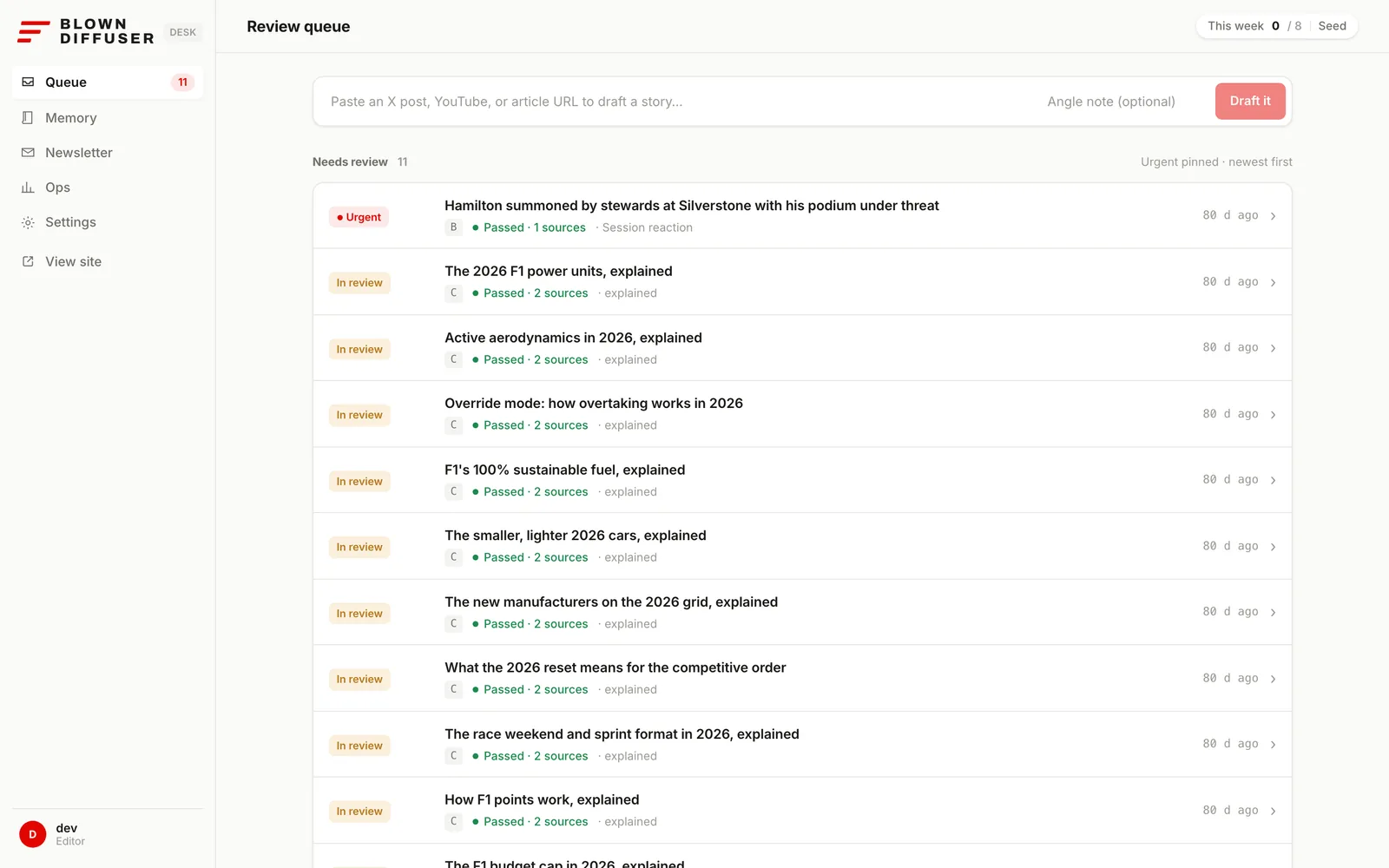
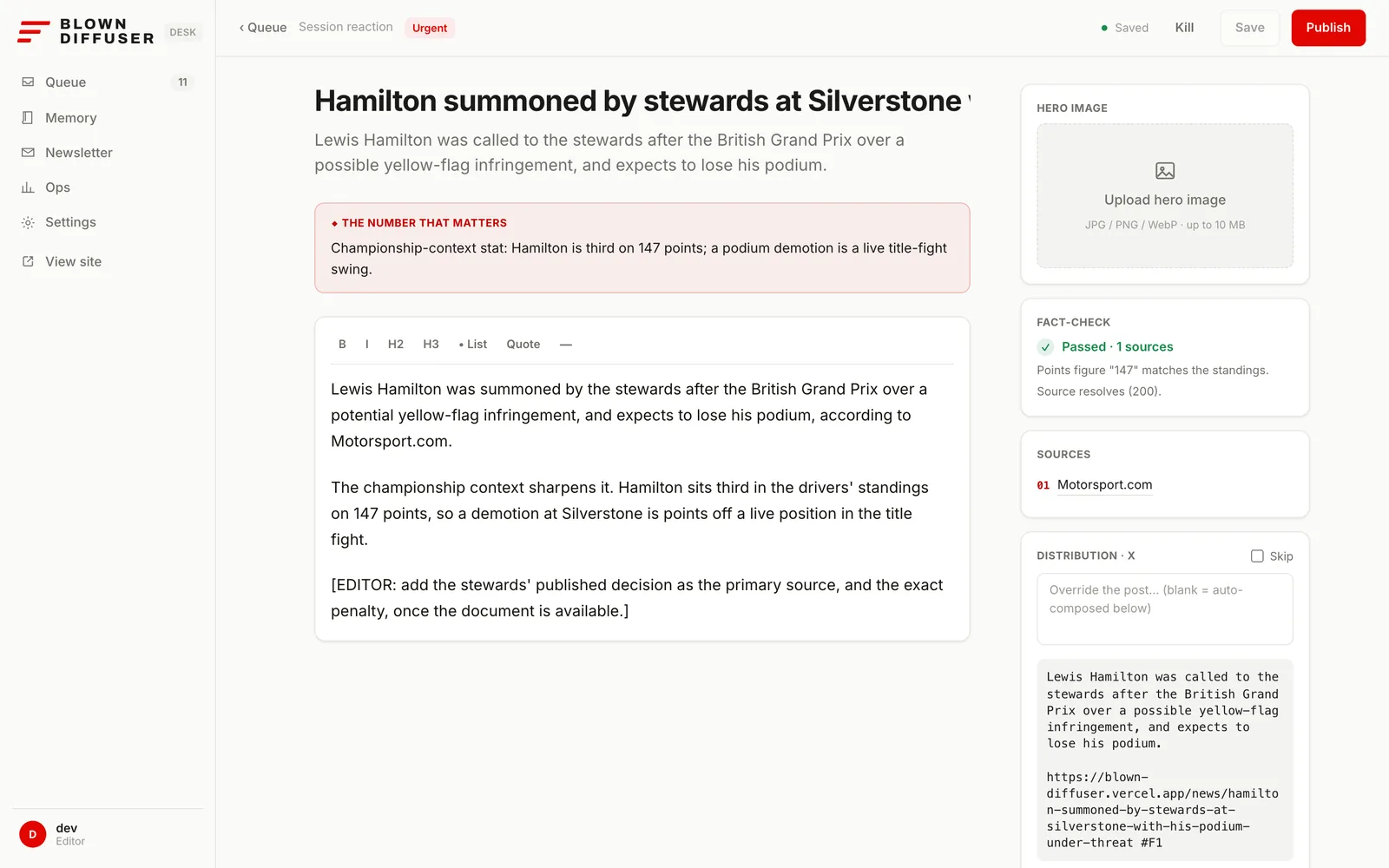
The agent pipeline was designed around one constraint: nothing ships without a named human reading it. The Scanner scores newsworthiness, the Drafter builds the article, the Fact-checker verifies every name and number, and the Editor-gate files a pull request to the editor’s review queue. The editor approves from a phone. Merge to main equals publish. The system’s throughput is the agents’; the publication’s credibility is the editor’s. This is not a technicality. It is the entire business model.

EDITORIAL STRATEGY
02

AI content without audit signals is penalised at launch

A new domain publishing 50 articles in week one looks like a content farm. Blown Diffuser’s publication ramp was scheduled deliberately: 6–10 articles per week in phase one (seed), rising to 15–25 per week in phase two (grow), after the domain has demonstrated indexing signals and consistent editorial standards. Velocity is earned, not assumed.

SEO ARCHITECTURE
03

One sport builds topical authority faster than any other strategy

A site that covers one sport completely is one Google trusts. Every race hub, every driver profile, every stewards’ decision round-up is an internal link to every other. The 2026 regulation reset — new power units, active aero, Cadillac and Audi entering the grid — created a library of explainer and analysis queries with no entrenched winner yet. We built for that window specifically.

SEO STRATEGY
04

The editorial machine is only as strong as the human habit

The publication works because F1’s schedule fits a working founder. Race weekends — the heaviest news volume — fall on free hours. The weekday drip (team statements, silly-season reports, FIA documents) is manageable inside a 15-minute review window. The product was designed around this specific founder’s calendar, not a generic media startup model.

PRODUCT FIT

WHAT WE BUILT — AND WHY IT’S BUILT THIS WAY

The architectural decisions that define the publication.

WHAT BLOWN DIFFUSER SHIPS

Custom Next.js publication (App Router, static generation + ISR) — article page, race hub, driver/team profiles, standings, how-to-watch pages, explainer hub, author pages

MDX-in-git content model — agents open pull requests; editor approves from GitHub mobile; merge = publish

Agent pipeline (six agents on GitHub Actions): Scanner, Drafter, Fact-checker, Data-updater, Editor-gate, Distributor

2026 regulation explainer hub — the regulation-reset library built once, internally linked from every technical mention

24 race hub templates — one per Grand Prix, each compounding as a perishable-query harvester

Full E-E-A-T signal architecture — named real editor with verifiable credentials, masthead, corrections policy, AI-use disclosure

MDX in git, not a CMS

The content lives in the repository. Agents open pull requests; the editor approves from a phone; merge to main triggers a Vercel redeploy. There is no dashboard, no editorial CMS, no login. The workflow is: phone notification → PR review → approve → published. Any friction beyond that is friction that makes the daily review window harder to maintain.

Named bylines, verified credentials

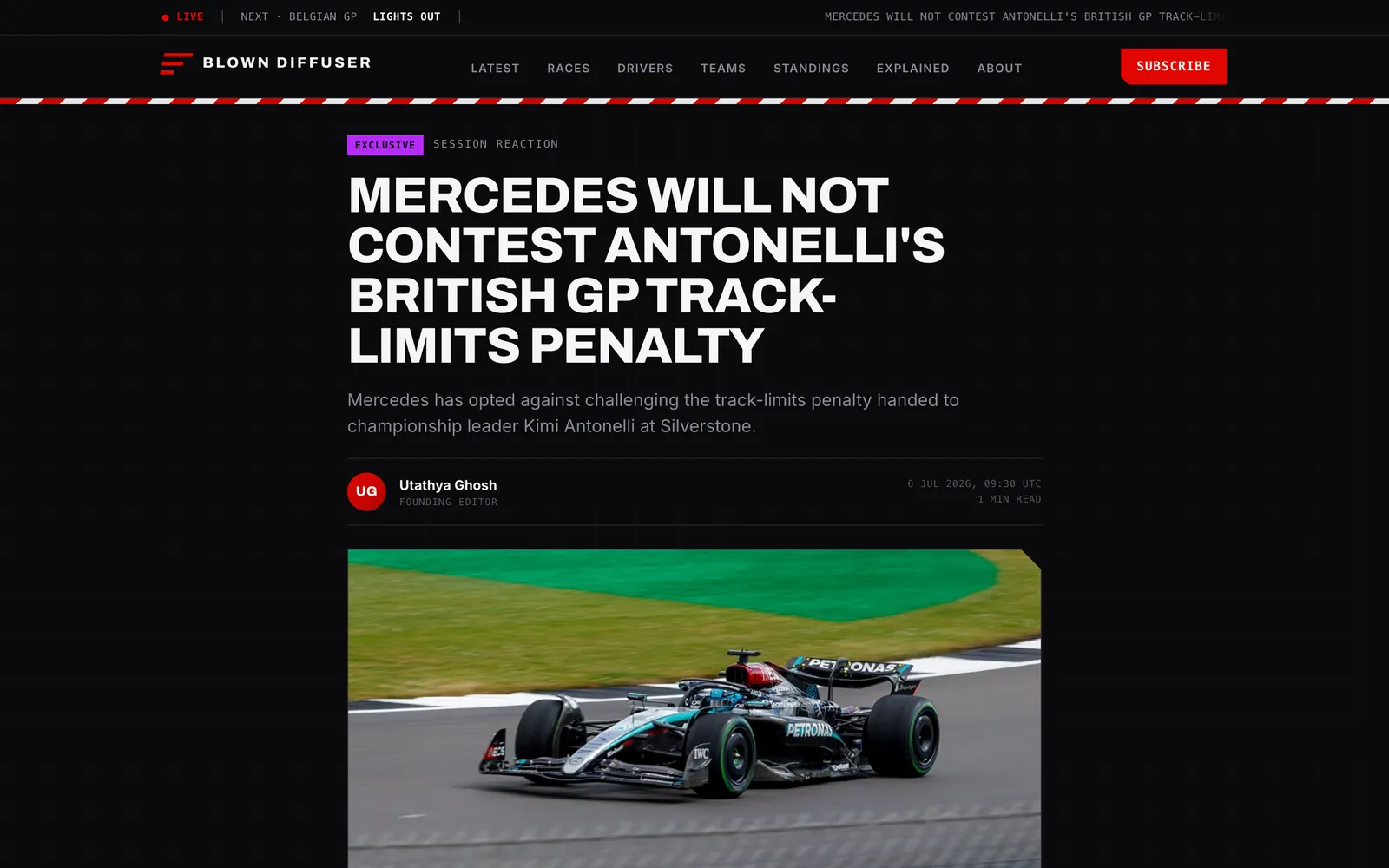
Every article carries the editor’s real name — Utathya Ghosh — with a published bio: EssentiallySports US-sports vertical (1M+ monthly reads), Real Madrid press office intern, Masters in Sports Journalism. The E-E-A-T signal isn’t a checkbox — it’s the claim that a person with this background is reading and approving every piece the agents produce. That claim is verifiable. Fake author personas are not.

No invented quotes — hard in the guardrails

Every agent prompt includes: no invented quotes. Silly-season reports are attributed to the originating outlet (“as first reported by…”). Two sources required for contract and legal claims. Ambiguity is flagged to the editor, never resolved by the agent. These are constraints in the system prompt of every drafting agent — not editorial guidelines posted somewhere the agents never read.

THE OUTCOME

Launched into the window on purpose.

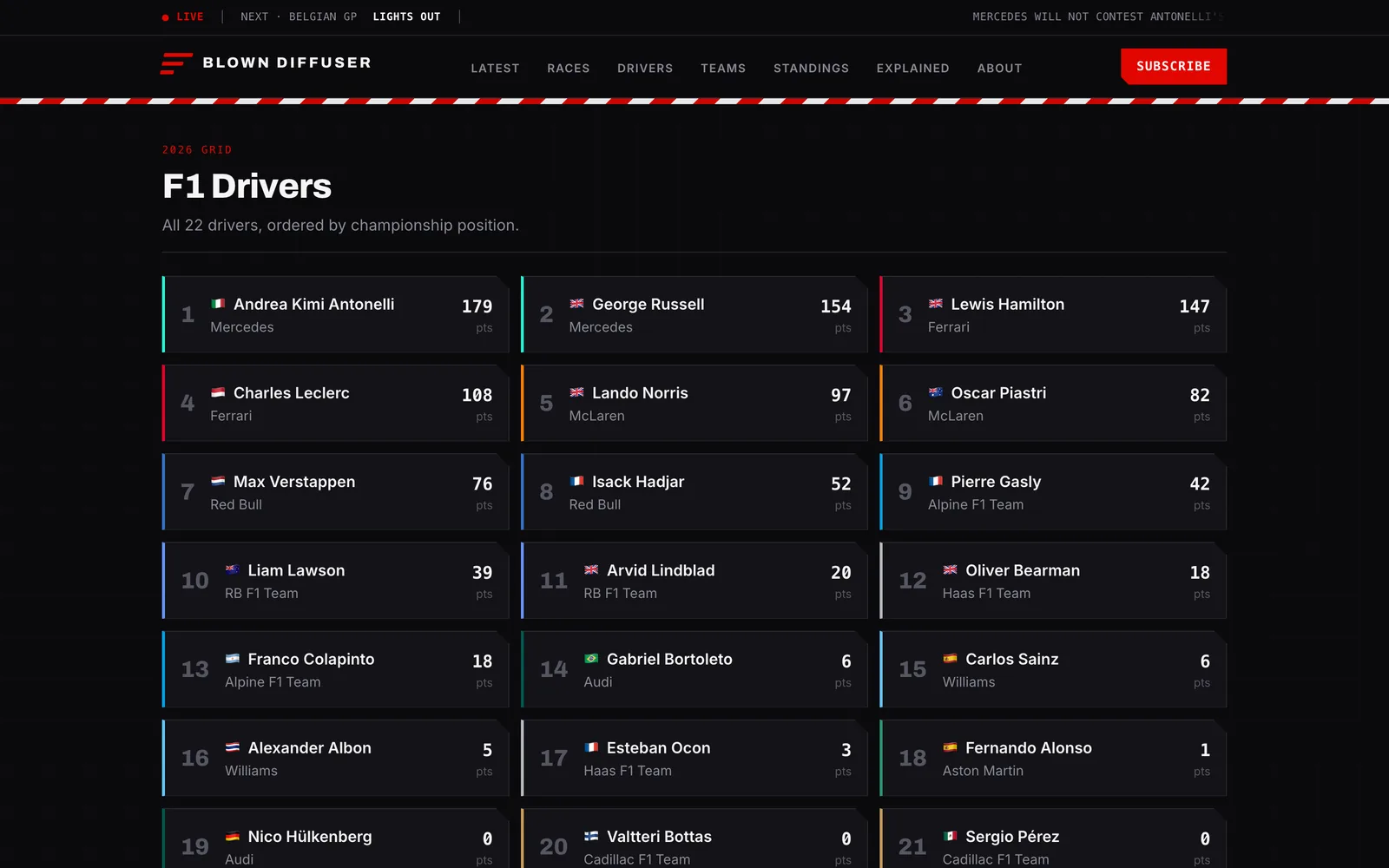
Publication live before the second half of the 2026 season. Engine A seeded: full driver grid profiles, team pages, all remaining race hubs for the season. Engine B operating through the daily review window. First post-race column published under real byline.

F1 news is the best-monetising sport audience in the world: affluent, global, obsessive, US and UK-heavy, still riding the Netflix documentary boom. A site that earns topical authority in this market and maintains it through the regulation reset has a 12–18 month window where it is significantly easier to rank than it will be in 2028. We launched into that window on purpose.

[Image coming soon]

blowndiffuser.com homepage

[Image coming soon]

Race hub — session times, results, tyre allocations, linked articles

[Image coming soon]

Article page — NewsArticle schema, named byline, clean timestamps

HONEST REFLECTION

The editorial gate is a habit, not a feature. Building the six-agent pipeline is weeks of work; maintaining the daily 15-minute review window is years. The machine produces nothing useful without the habit — and the habit is easier to break than it looks from the outside. The architecture supports the habit by making the review as frictionless as possible (one phone, one merge button). Whether the habit holds is the only remaining risk.

Building a content business that needs infrastructure, not a template?

Editorial architecture, agent pipelines, and the publication itself.
We build the whole thing.

Start the conversation →